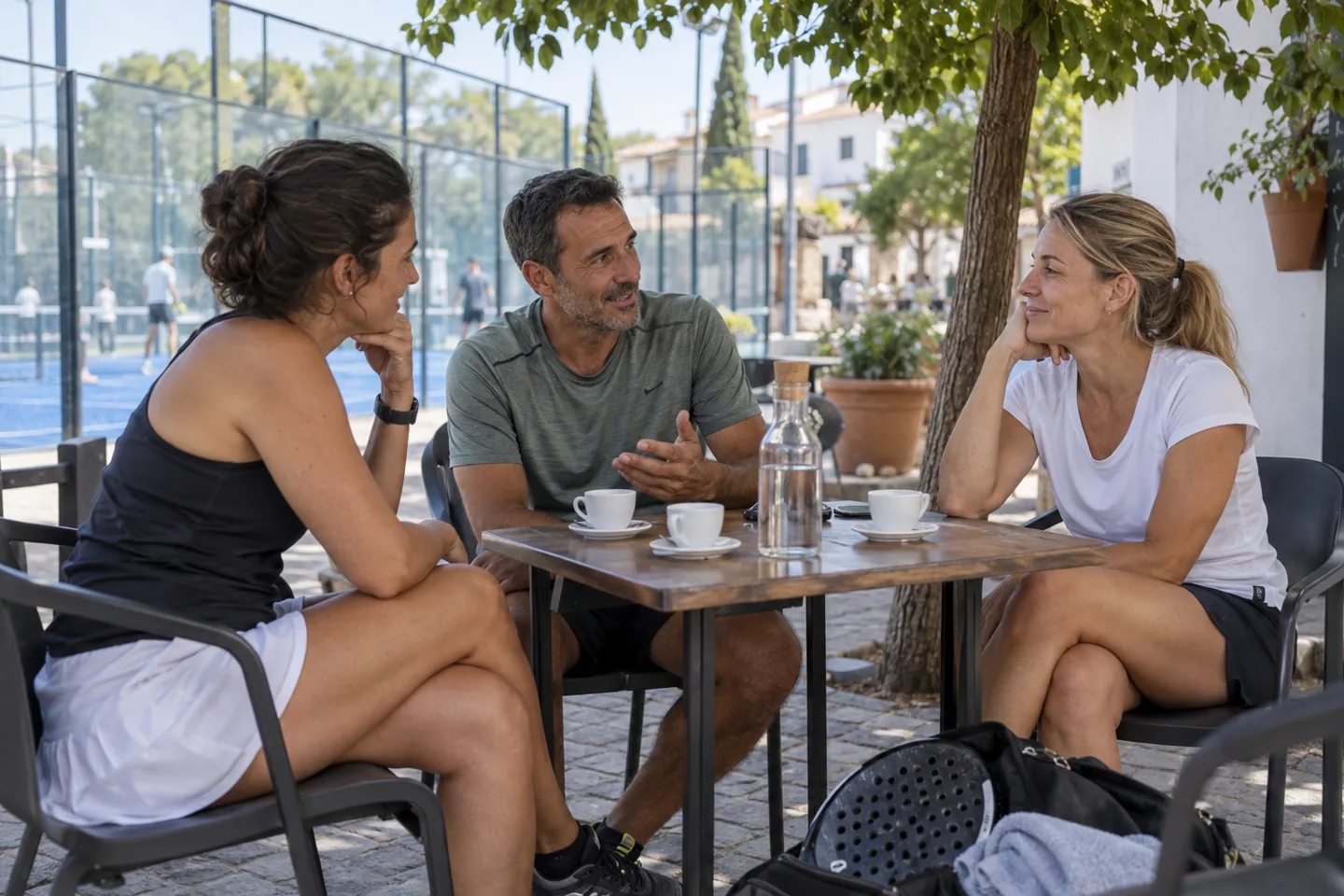
Connection starts with small shared moments
Group sport can make meeting easier because there is something to do together. In padel, not everyone needs to start with a long conversation: serves, partner changes and short exchanges provide a natural setting.
It will not feel the same for every person or group. New arrivals need time to settle in. A name, a calm explanation and a specific invitation to the first game often help more than being told to be outgoing.
A padel vacation offers shared time off. A workation adds regular work blocks. Both can create opportunities to meet without making every hour communal.
Keep the first day simple
Imagine arriving alone when several people already know each other. A brief welcome and clear information about the next game can remove a lot of uncertainty. You do not need to organise an entire court yourself or be the most entertaining person at dinner.
A calm format helps for a first game: explain the rules briefly, describe levels openly and make room for changing partners. People can then meet without a close competitive match setting the tone immediately.
An easy invitation to accept
“We are having a relaxed game tomorrow. Would you like to join? Some of us are going for breakfast afterwards.” A time and the option to join only part of it turn a large social expectation into a manageable choice.
A suitable level is a social question too
A large skill gap can create pressure: some feel held back; others feel responsible for every mistake. Describe your experience as well as a level number. How often do you play, how familiar are you with the walls and doubles positioning, and do you want to practise or compete today?
Attitude matters as well. Partners who communicate calmly and treat mistakes as normal leave room to learn. Constant unsolicited corrections can turn a friendly game into a test. Agree beforehand whether you want tips or simply want to play.
The player finder helps you look for contacts. The coach finder can help with instruction for a shared introduction. Explain what you want so the first arrangement is not built on conflicting expectations.
Good community allows private time
Some feel energised after several hours with a group; others need a break. That is not a division between sociable and antisocial people. Different needs are normal.
A shared meal, a walk and a match need not be a package. Someone who spends the afternoon alone by the sea can still belong at breakfast. Clear information helps a travel group more than unspoken assumptions about participation.
The recovery guide explores how downtime can fit around sport and work. On a workation, respect call schedules and avoid interpreting quiet work as a lack of interest in the group.
Why movement and connection belong together
The WHO recognises social connection as an important aspect of health and wellbeing. Padel gives it a practical setting: an arrangement to meet, a shared goal and time to talk. How those encounters develop into closer relationships remains personal.
The review of padel, pickleball and wellbeing describes a young and varied field of research. Recreational play differs from competition, and pickleball findings do not transfer directly to padel. For an enjoyable group, focus on what you can shape: suitable partners, a shared pace and pleasure in learning.
Research on tennis and longevity also discusses the social side of play as a possible explanation for positive associations. Its contribution has not been settled. In everyday padel, however, the connection is appealing: people you enjoy playing with can give you a reason to stay regularly active. Read more in the racket sports and longevity guide.
Keep a connection after the trip
Your holiday rhythm need not transfer unchanged to home. A regular date may be enough to keep things going. Suggest a specific first game rather than starting a group chat with “We should play again sometime.”
If the travellers live far apart, look for a local group as well. Ask about an open game at a suitable level and mention that you are new. The training plan can turn what you learnt into a small practice goal.
For shared time off, explore the vacation; for work alongside sport and community, explore the workation. If you already travel as a team, a team trip (details in German) may fit too. The format comparison helps you choose a week around real needs.
An easy next connection
Small invitations leave room for different people.
Frequently asked questions
Do I need to be very outgoing?
No. A shared game can make joining easier without requiring lots of conversation immediately. A calm first activity often helps.
What helps when levels differ a lot?
Discuss experience and desired pace, choose suitable groups and avoid making every game competitive.
Can I skip activities?
Optional participation and clear arrangements make a group more comfortable. Wanting private time is not a personal slight.
How can I keep connections at home?
Suggest a specific game and find a local group if everyone lives far apart. A small regular commitment may be enough.
Notes
General information about movement and travel, not individual medical advice. Sources are linked alongside the relevant statements. Updated 13 October 2026.